

Good Practice: China’s Grassroots Meteorological Disaster Emergency Planning System
Contingency Plan System
In 2009, the Chinese government issued its first national-level plan, the National Meteorological Disaster Contingency Plan. Provincial, municipal, and county governments across the country subsequently developed specialized emergency plans tailored to regional risks, forming a comprehensive four-level (national–provincial–municipal–county) contingency plan system. Meanwhile, 28,000 townships have incorporated meteorological disaster prevention into their integrated disaster prevention systems, and 154,700 villages have developed meteorological disaster emergency action plans. This tiered system conveys emergency response instructions to communities and rapidly mobilizes sectors and social resources for joint response, ensuring effective implementation of disaster prevention, mitigation, and relief efforts.
Working Mechanism Guided by Early Warning
The disaster prevention mechanism “guided by early warning” is an early warning-based disaster risk management model through coordinated cross-sector and society-wide collaborative efforts, aiming to minimize casualties and economic losses. Through years of practice, China has established a working mechanism that enables rapid response and coordinated actions from the national level down to the grassroots level.
Clarified government responsibilities
The State Council is responsible for coordinating disaster management nationwide, while CMA is tasked with weather monitoring, forecasting and warning. Local governments manage emergency responses within their jurisdictions. When a disaster spans provincial boundaries, the designated State Council institution activates the corresponding national emergency command mechanism, ensuring unified leadership over response efforts and any secondary disasters.
Enhanced cross-department coordination
Transforming early warnings into prevention actions requires effective coordination among meteorology, water resources, emergency management, environment, transportation, and energy departments. At the national level, dedicated deliberative bodies have been established, including the National Committee for Disaster Prevention, Reduction and Relief, and the National Flood Control, Typhoon Prevention and Drought Relief Headquarters. CMA initiated an inter-ministerial liaison meeting system involving over 28 government departments and established a “Meteorology+” early warning response linkage mechanism. Governments at all levels trigger corresponding response measures according to varying warning levels through timely joint prevention actions.
Guiding public engagement
The Chinese government proactively guides the participation of social resources—including NGOs, volunteers, and social workers—in disaster prevention and relief. Social entities such as hospitals, schools, electricity providers, transportation operators, and hazardous chemical enterprises each bear designated individual responsibilities for disaster prevention. The “grid + early warning” approach disseminates early warnings through community-level governance structures: when disastrous weather occurs, grid workers perform the duties of meteorological informants and are responsible for promptly delivering warning information to every vulnerable household.
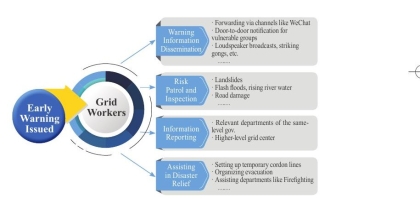
Figure 1 Grid workers performing duties of meteorological messengers

Figure 2 Grid workers urgently warn villagers by beating gongs or by loudspeakers and assist in the evacuation of personnel
Emergency drills and popular science outreach are also vital components. Regular drills are conducted for grid workers, meteorological messengers, and the public in communities, enterprises, and schools. Disaster prevention knowledge has been incorporated into school education, and popular science activities are tailored for teenagers.
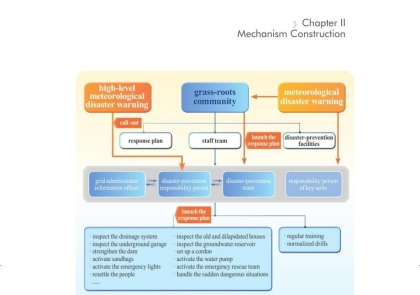
Figure 3 Community early warning response framework
Success Stories

China’s working mechanism guided by early warning has withstood the test of multiple major natural disasters. Compared with the traditional “during and post-disaster response” model, this mechanism shifts the focus of disaster prevention to the front end. Through multi-level cross-department responses triggered by early warnings, it has achieved a transformation of the disaster prevention, reduction, and relief system from a passive to an active mode, significantly improving the efficiency of disaster response.